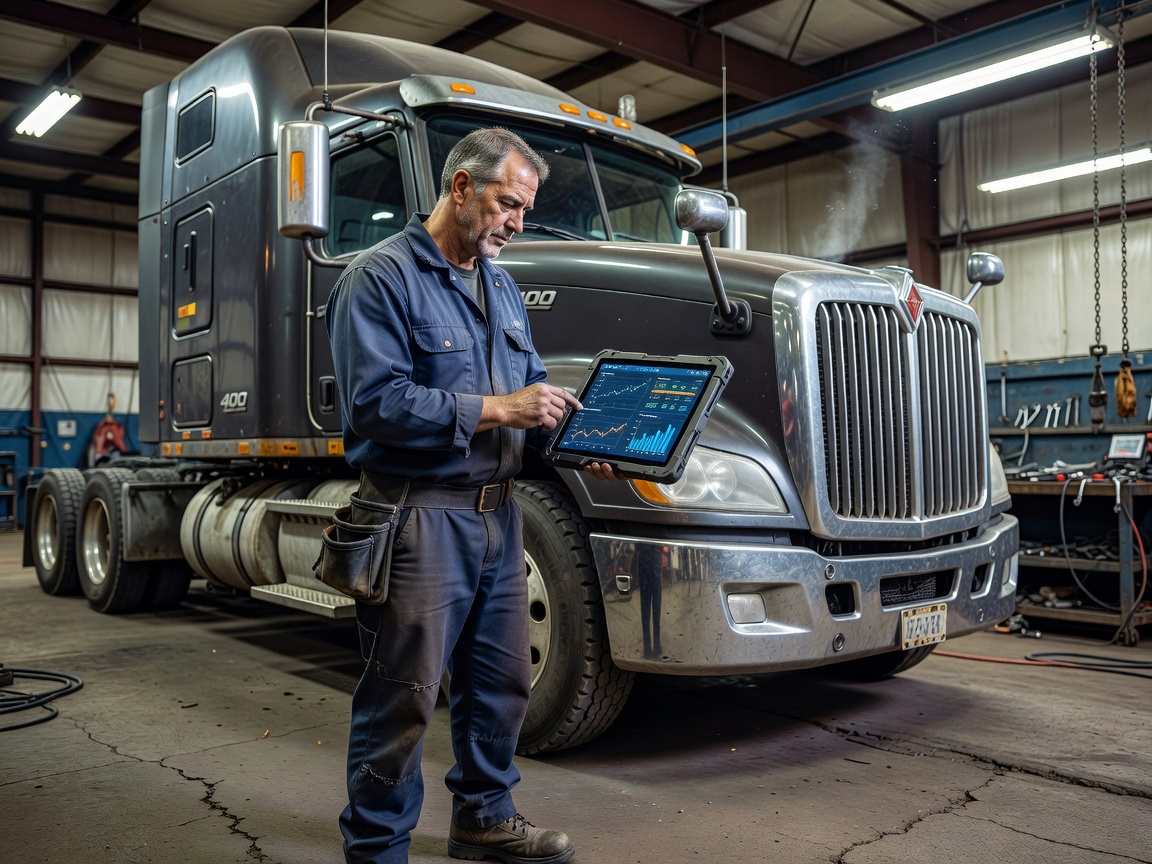
Stopping Breakdowns Before They Happen
Vehicle downtime is one of the largest hidden costs in the commercial freight industry. When a truck breaks down on the side of the highway, the carrier faces towing fees, emergency repair costs, delayed load penalties, and frustrated customers. Historically, fleets relied on calendar- or mileage-based preventative maintenance schedules. While effective at a baseline level, this approach is rigid; it either replaces parts prematurely or fails to catch anomalous wear and tear. Predictive maintenance, powered by the Internet of Things (IoT), changes the equation entirely by monitoring the actual health of the vehicle's components in real time.
Through a network of specialized sensors installed across the tractor and trailer, data is continuously fed into analytical algorithms. These algorithms cross-reference historical repair data and baseline performance metrics to predict when a specific part—like an alternator, battery, or brake pad—is likely to fail. This allows maintenance teams to schedule repairs proactively during planned downtime, rather than dealing with roadside emergencies.
Tire Pressure Monitoring Systems (TPMS)
Tire-related issues are historically the most frequent cause of roadside breakdowns for commercial trucks. Blowouts are not only expensive but incredibly dangerous, often leading to loss of control or debris striking other vehicles. TPMS sensors, mounted either inside the tire or directly onto the valve stems, constantly stream pressure and temperature data back to the driver and the fleet maintenance portal.
- Under-inflation Alerts: Catching a slow leak before the tire is ruined, preserving the costly tire casing for future retreading.
- Temperature Spikes: High tire temperatures often indicate a dragging brake or a failing wheel bearing. By alerting the driver to a heat anomaly, the system can prevent a catastrophic wheel-off incident or a trailer fire.
- Fuel Economy: Properly inflated tires offer optimal rolling resistance, directly improving the fleet's overall fuel economy.
Engine Diagnostics and Fluid Monitoring
Modern commercial diesel engines are incredibly complex and generate thousands of fault codes. Predictive maintenance software filters this noise. When a diagnostic trouble code (DTC) is triggered by the Engine Control Module (ECM), the IoT platform instantly analyzes the severity of the code. A minor sensor fault might simply be flagged for attention during the next scheduled oil change. However, if sensors detect an abnormal drop in oil pressure or rising coolant temperatures, the system can immediately alert the dispatcher to route the truck to the nearest service bay before the engine suffers permanent damage.
Advanced systems even monitor the quality of the fluids themselves. Dielectric sensors submerged in the oil pan can analyze soot levels, viscosity, and water contamination, triggering an oil change based on the actual chemical degradation of the lubricant rather than an arbitrary mileage marker. This condition-based maintenance strategy extends service intervals safely, reducing oil consumption and labor costs over the lifespan of the vehicle.