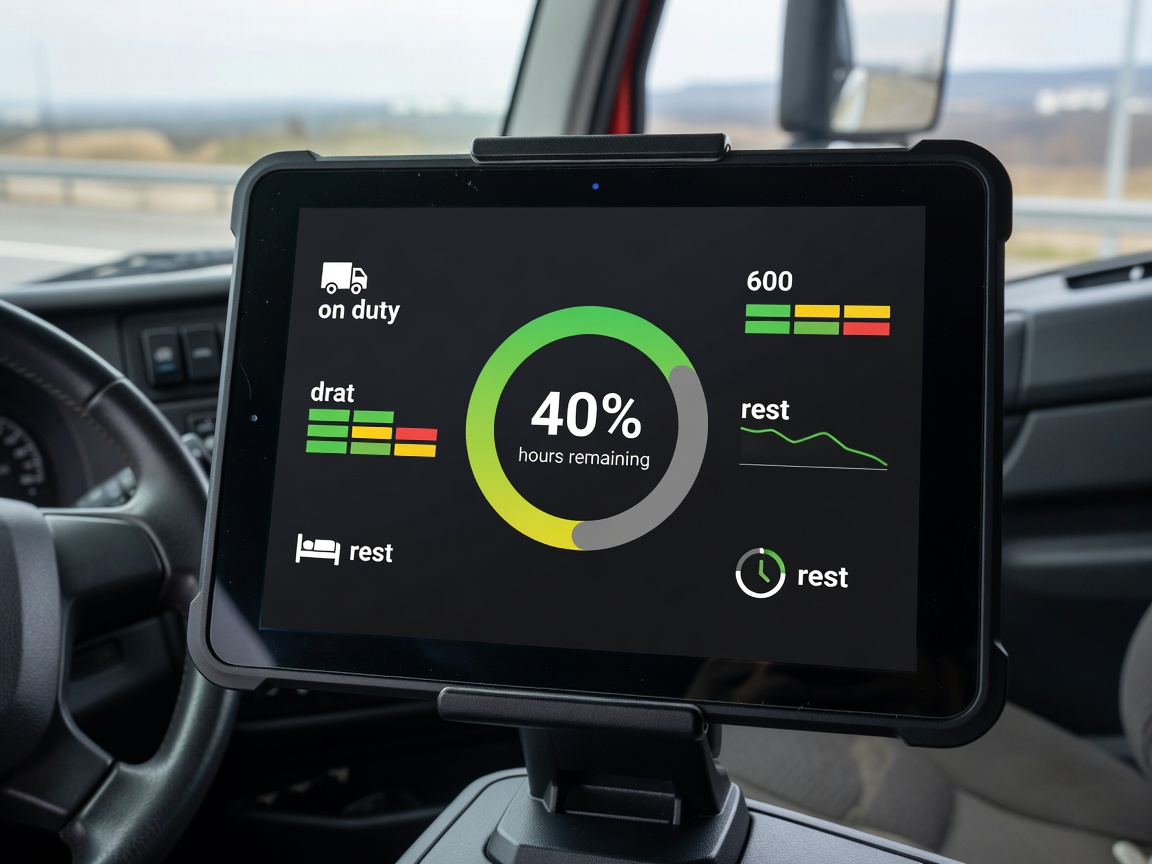
From Paper to Digital Enforcement
The era of paper logbooks—often cynically referred to in the trucking industry as "comic books" due to how easily they could be falsified—has officially closed. Electronic Logging Devices (ELDs) have fundamentally transformed how commercial driver compliance is monitored and enforced. By directly synchronizing with the commercial vehicle's engine, an ELD automatically records driving time, ensuring that Hours of Service (HOS) regulations designed to prevent driver fatigue are strictly adhered to without manual intervention.
Regulatory bodies across North America and Europe mandate the use of ELDs to ensure safety on public highways. The underlying technology guarantees that when the wheels of a heavy truck turn beyond a specific speed threshold, the driver's duty status is immutably switched to "Driving." This level of automated tracking eliminates the ambiguity and human error associated with traditional record-keeping, standardizing enforcement during roadside inspections.
Hardwired vs. BYOD Architectures
When selecting an ELD solution, fleets generally choose between two primary architectural approaches, each with distinct advantages and cost implications:
- Dedicated Hardwired Units: These are robust, industrial-grade tablets permanently mounted within the cab, hardwired into the vehicle's power and diagnostic port. They offer superior reliability, are less prone to theft or dropping, and ensure the device never leaves the truck. However, the initial capital outlay is significantly higher.
- Bring Your Own Device (BYOD): This model utilizes a small physical dongle plugged into the engine's diagnostic port, which transmits engine data via Bluetooth to an app on the driver's personal smartphone or a fleet-issued consumer tablet. BYOD systems lower upfront hardware costs but introduce potential issues with Bluetooth connectivity drops, device battery management, and software compatibility across different operating systems.
Streamlining Roadside Inspections
A major advantage of the ELD mandate is the friction reduction during roadside inspections conducted by enforcement officers. Modern ELDs are equipped with specific data transfer protocols—such as Web Services, Bluetooth, or USB output—that allow safety officials to ingest the last several days of log data instantly. The driver simply puts the ELD interface into "Inspection Mode," which locks out access to sensitive fleet data and presents only the legally required HOS graphs to the officer. This rapid verification gets compliant drivers back on the road faster, increasing overall freight velocity.
Beyond the Mandate: Operational ROI
While fleets initially adopted ELDs to satisfy government mandates, the technology yields substantial operational benefits. Because the ELD continuously tracks available driving hours, dispatchers gain unprecedented visibility into driver availability. A dispatcher can query the fleet management software to see exactly which drivers have the legal hours remaining to complete a specific load, optimizing load assignment and preventing costly HOS violations that can lead to fleet-wide out-of-service orders.
Furthermore, electronic logs vastly reduce the administrative burden on back-office staff. The days of physically collecting, auditing, and storing thousands of paper log sheets are gone. Automated auditing tools flag potential violations—such as missed rest breaks or unassigned driving time—allowing safety managers to address issues proactively through targeted driver training.