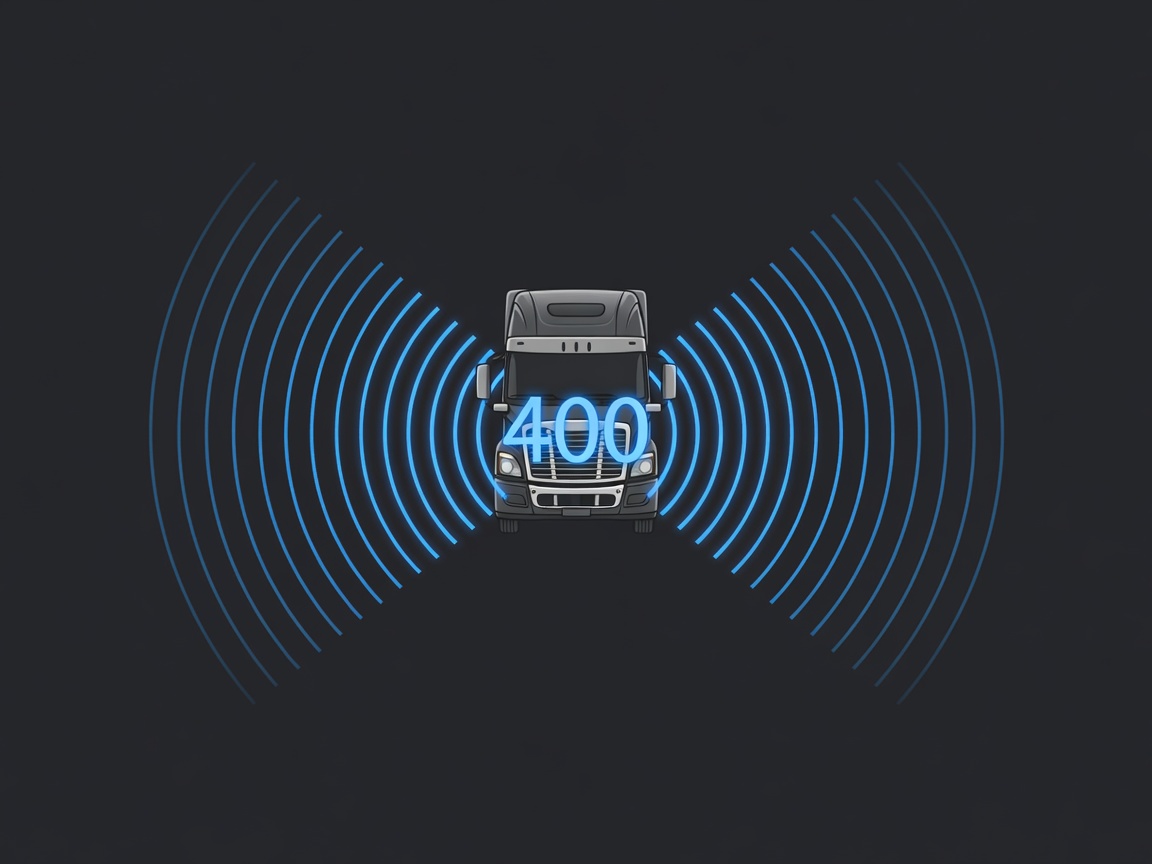
Elevating Active Safety
Advanced Driver Assistance Systems (ADAS) represent a massive technological leap forward for commercial motor vehicles (CMVs). While passenger vehicles have enjoyed basic ADAS features for over a decade, engineering these systems for Class 8 trucks—vehicles that can weigh up to 80,000 pounds when fully loaded—presents unique physics and latency challenges. Today's commercial ADAS solutions utilize a sophisticated fusion of radar arrays, high-definition cameras, and sometimes LiDAR, acting as an unblinking digital co-pilot that continually scans the environment for hazards.
The primary goal of ADAS is not to replace the human driver, but to augment their capabilities. Fatigue, blind spots, and sudden traffic changes account for a large percentage of heavy-truck collisions. ADAS intercepts these scenarios by providing tiered interventions: starting with auditory or haptic warnings, and escalating to active mechanical intervention if the driver fails to respond in time.
Core ADAS Capabilities for Heavy Duty Transport
Modern safety suites for trucks are typically bundled into an integrated package by original equipment manufacturers (OEMs) or provided as high-end aftermarket retrofits. The most impactful features include:
- Forward Collision Mitigation (FCM): Utilizes forward-facing radar and cameras to detect stationary or slower-moving vehicles in the truck's path. It issues a warning, and if the closure rate is critical, it can autonomously apply the foundation brakes to mitigate or prevent a rear-end collision.
- Lane Departure Warning (LDW) & Lane Keep Assist (LKA): Cameras monitor the painted lane markers. If the truck drifts without an active turn signal, LDW emits an alert (often simulating the sound of a rumble strip). LKA can actively apply micro-steering adjustments to center the vehicle.
- Blind Spot Monitoring: Radar sensors mounted along the tractor's side fairings detect vehicles hiding in the massive blind zones of a commercial rig, illuminating an indicator light on the corresponding side mirror.
- Adaptive Cruise Control (ACC): Maintains a set following distance from the vehicle ahead, automatically modulating the throttle and engine brake to keep the heavy truck safely spaced in flowing traffic.
Pros and Cons of ADAS Integration
The Advantages: The immediate benefit of ADAS is a drastic reduction in the severity and frequency of accidents. Rear-end collisions, which are among the most costly types of commercial crashes, see marked reductions when Forward Collision Mitigation is active. Furthermore, ADAS reduces the cognitive load on the driver in heavy stop-and-go traffic, decreasing fatigue over long shifts.
The Challenges: Conversely, ADAS implementation is not without friction. Calibration is incredibly sensitive; a windshield replacement or a minor bumper impact can throw the camera or radar out of alignment, requiring specialized, expensive recalibration services before the truck can safely return to the road. Additionally, poorly tuned systems can suffer from "false positives," such as braking for overhead signs or bridges. If drivers experience too many false alarms, they may lose trust in the system or attempt to disable it, nullifying the investment.
The Road to Autonomy
Commercial ADAS is essentially the foundational stepping stone toward higher levels of vehicle automation. By perfecting sensor fusion, braking algorithms, and steering actuators, the industry is building the exact hardware and software needed for future autonomous freight operations. For now, however, the human driver remains the critical decision-maker, supported by an increasingly intelligent array of technological safeguards designed to ensure they return home safely after every haul.